
How to develop a content strategy
A well-thought-out content strategy enables you to deliver high-quality content and create a positive content experience that boosts customer loyalty and conversions.
For a content writer to know what to write, they need the right input. Our SEO content briefings therefore include comprehensive SEO and UX specifications.
For content to achieve strong ranking on Google, it must be written in a way that allows the algorithm to properly assess its relevance. Although it takes far more than just search engine optimized text to achieve a top ranking, a successful content strategy ultimately stands or falls with the quality of the content produced.
Our content writers are trained to create copy based on UX and SEO specifications and receive the necessary input in the form of a detailed SEO text briefing. However, there is little value in an SEO consultant (f/m/x) merely researching a list of keywords that should appear in the text. This approach may have worked two decades ago, when Google’s algorithm was still in its proverbial infancy.
Since the introduction of the Hummingbird algorithm in 2013 at the latest, Google has focused on so-called semantic search. This means pages are no longer evaluated based on individual words alone, but rather on the intent behind a search query.
The algorithm has become increasingly effective at assessing whether content meets users’ needs for high-quality, engaging, and logically structured text that clearly serves the search intent. This is exactly what must be considered when creating content and passed on to content writers through an SEO briefing.
Want to maximize your content marketing ROI? Boost your visibility, attract qualified traffic, and increase your conversion rate with a content strategy built on precise, data-backed insights.
Google’s goal is not to satisfy SEOs who promise well-ranking landing pages to their clients. Instead, Google primarily focuses on its own customers – the users of the search engine who want their questions answered with the best possible results. This is why pages categorized as most relevant for a specific keyword achieve strong rankings. In other words, pages that best serve the search intent behind that keyword. If we want to produce content that performs well, we must always understand and account for the user’s search intent.
“If you don’t know the user intent behind the key words you’re optimizing for, then you’re doing it wrong. Also, if you are optimizing for key words versus the needs of the user, then you’re doing it wrong.”
– Jordan Kasteler, SEO & Marketing Consultant
In the context of information retrieval, i.e. the evaluation and delivery of information from large volumes of unstructured data, the terms relevance, pertinence, and usefulness are often used.
Relevant content matches a user’s search query, but that alone does not automatically make it pertinent. Pertinence includes a subjective component: Is the content appropriate or interesting for the user? Is the information applicable? This can vary between two users who submit the same query. Usefulness goes one step further and refers to direct added value for the user – providing new information the user was not previously aware of. If you would like to explore this topic in more detail, Prof. Dr. Dirk Lewandowski explains these concepts and their relationships clearly in his video on relevance, pertinence and usefulness.
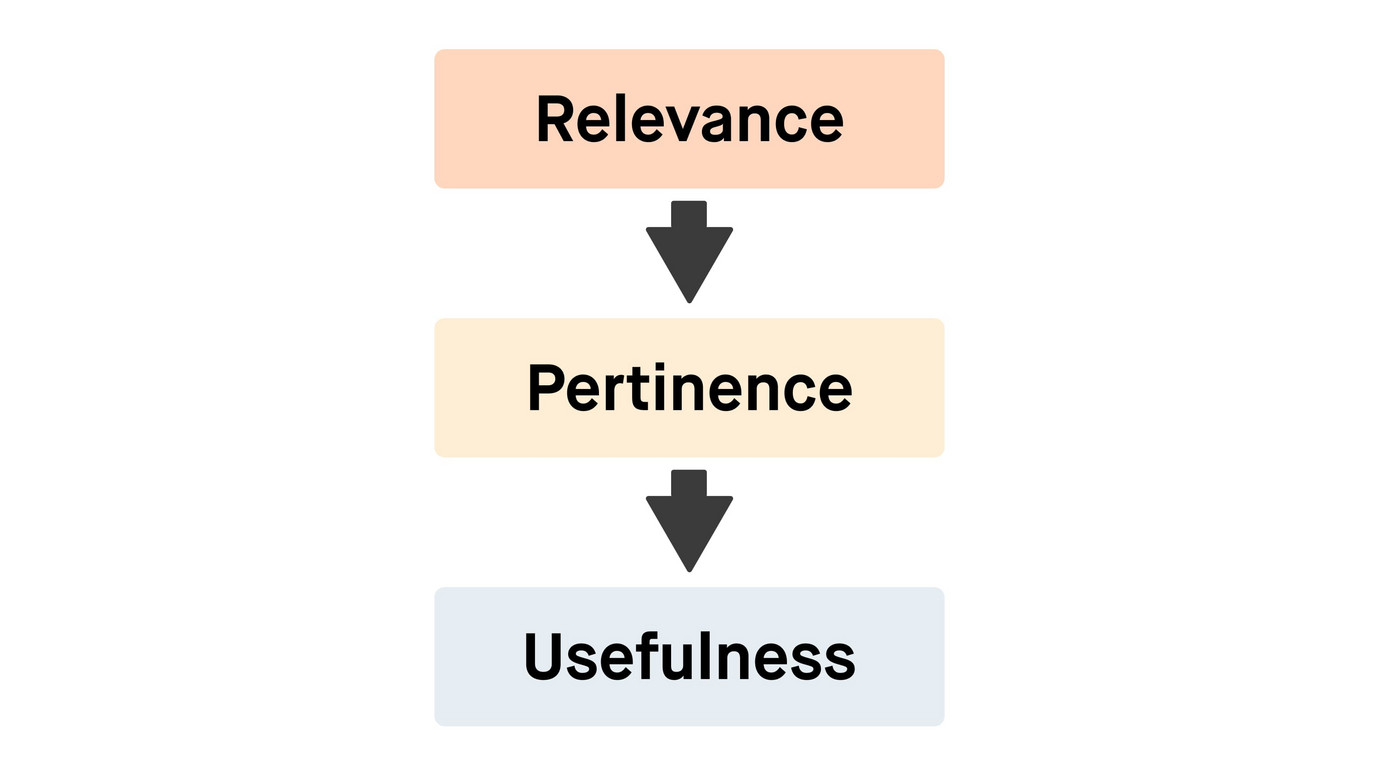
We cannot know exactly how Google’s algorithm works, nor is it possible to create content that is pertinent and useful for every potential user. However, Google’s business objective is clear: to provide its customers – the users of the search engine – with search results that are relevant, pertinent, and useful.
Our task is therefore to ensure that, when creating an SEO content briefing and subsequently producing the content, we deliver information that is relevant, pertinent, and useful to as many people in the target group as possible.
To properly understand and address search intent during keyword research, we must recognize that there are different types of search queries:
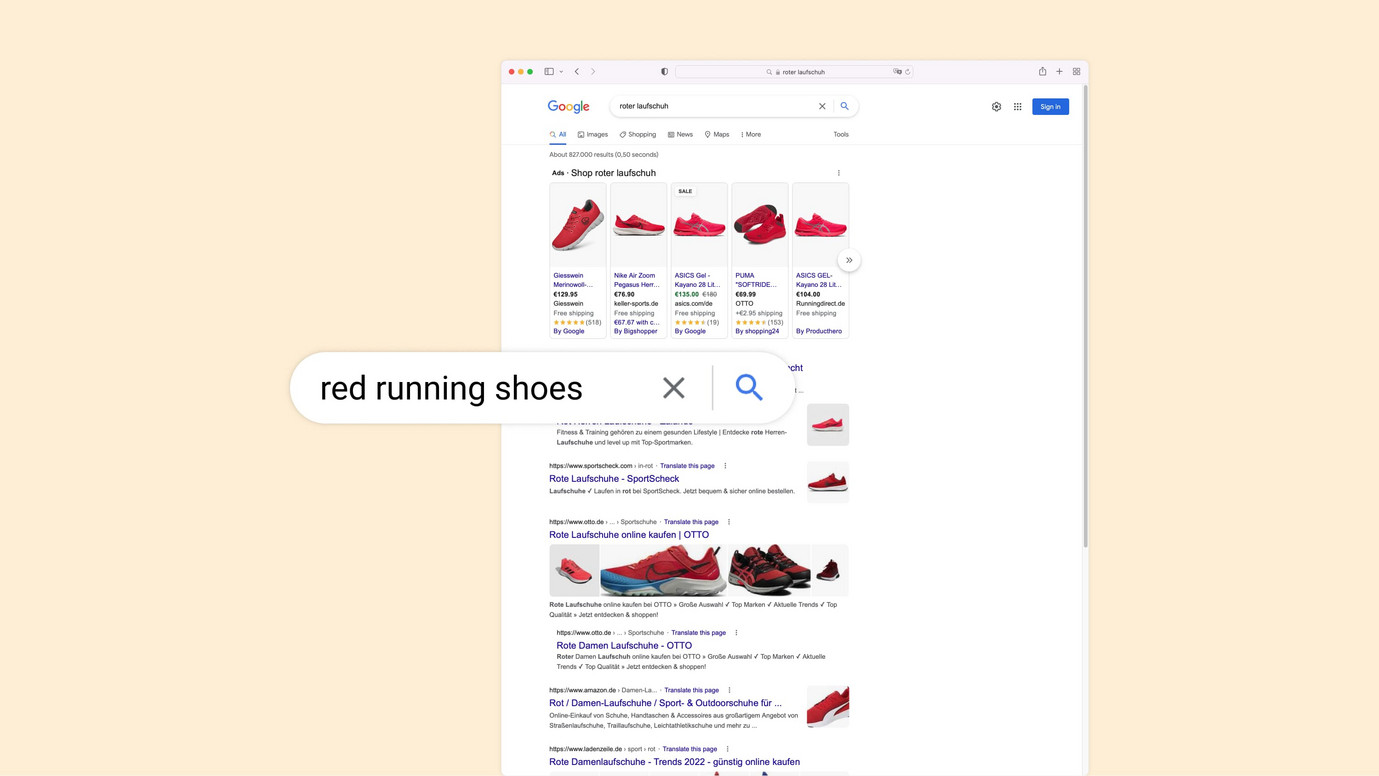
We want to optimize product category pages for keywords that are primarily transactional – meaning there is a clear intent to buy behind them. A user who enters 'red running shoes' into the search bar wants to purchase shoes and will expect an online store, not a thousand-word article about the history of running.
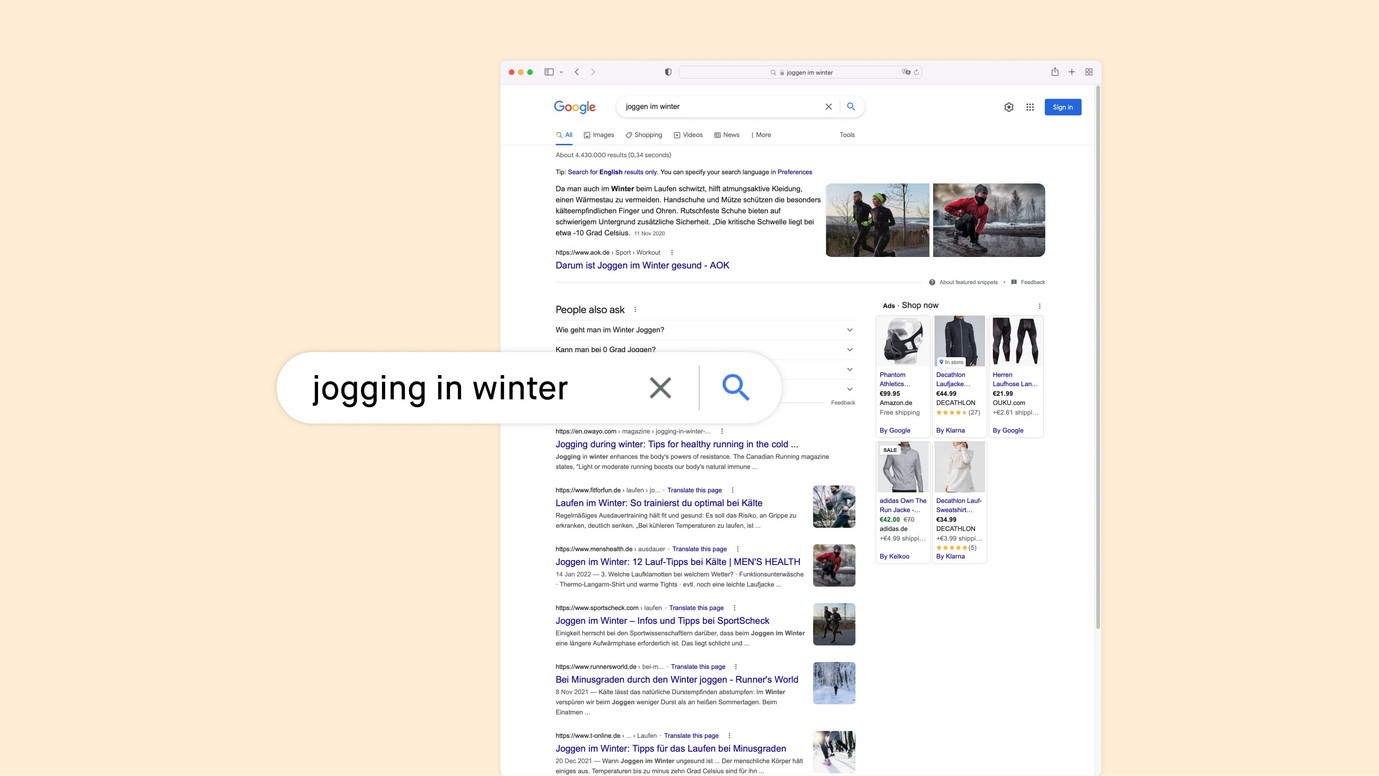
Someone searching for 'jogging in winter,' on the other hand, is not looking for a scarf shop. Instead, they want advice on what to consider when running in cold weather in order to protect their health. These are informational keywords.
The third type of search query is less common in our content production. With navigational keywords, users already know which specific page or subpage they want to reach. These are often branded searches. Many people, for example, search for 'Facebook' to access facebook.com because it feels more convenient than typing the full URL.
The examples above may seem straightforward, but for many keywords, search intent is not immediately clear. In addition, search intent is not limited to whether a query is transactional, informational, or navigational. It also involves understanding whether users are looking for step-by-step instructions or inspirational content. Are images preferred, or is video essential? Are users looking for concise tips, or is their intent to find comprehensive advice?
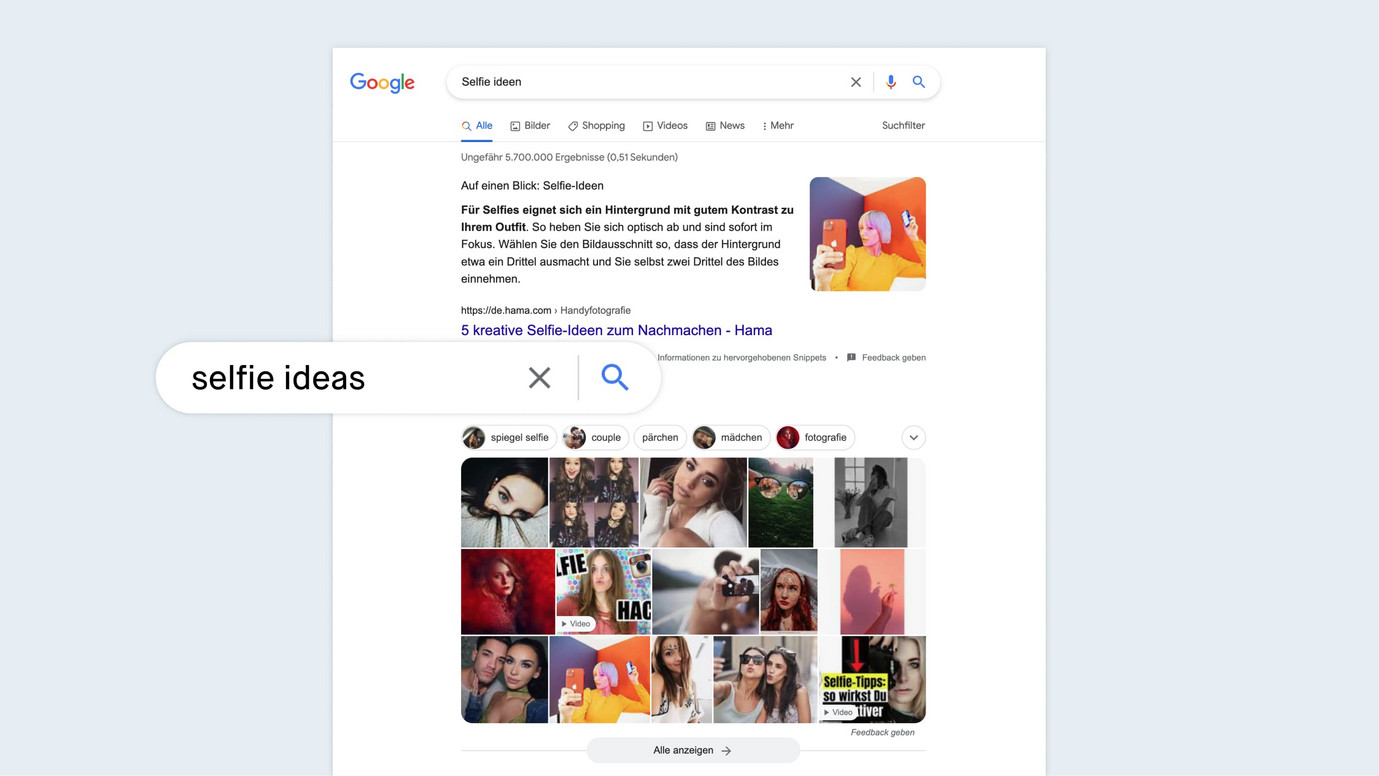
Google’s results show that users are primarily looking for inspiration. Images are essential in this case, as evidenced by the prominent placement of image results even before the first organic listings.
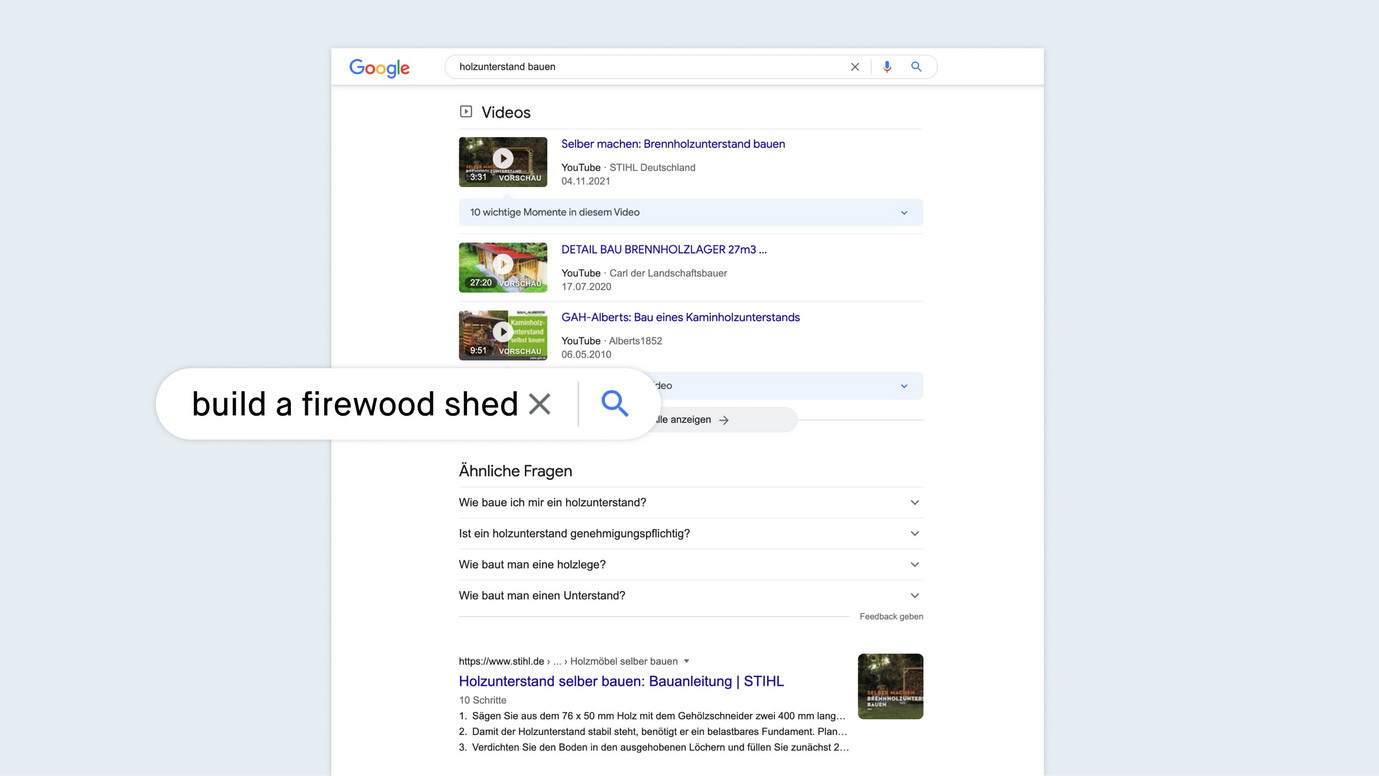
Images are also important for this query, but video results appear before the first organic rankings as well. Videos, especially video tutorials, therefore play a major role for content optimized for this keyword.
The intent behind step-by-step instructions must also be taken into account.
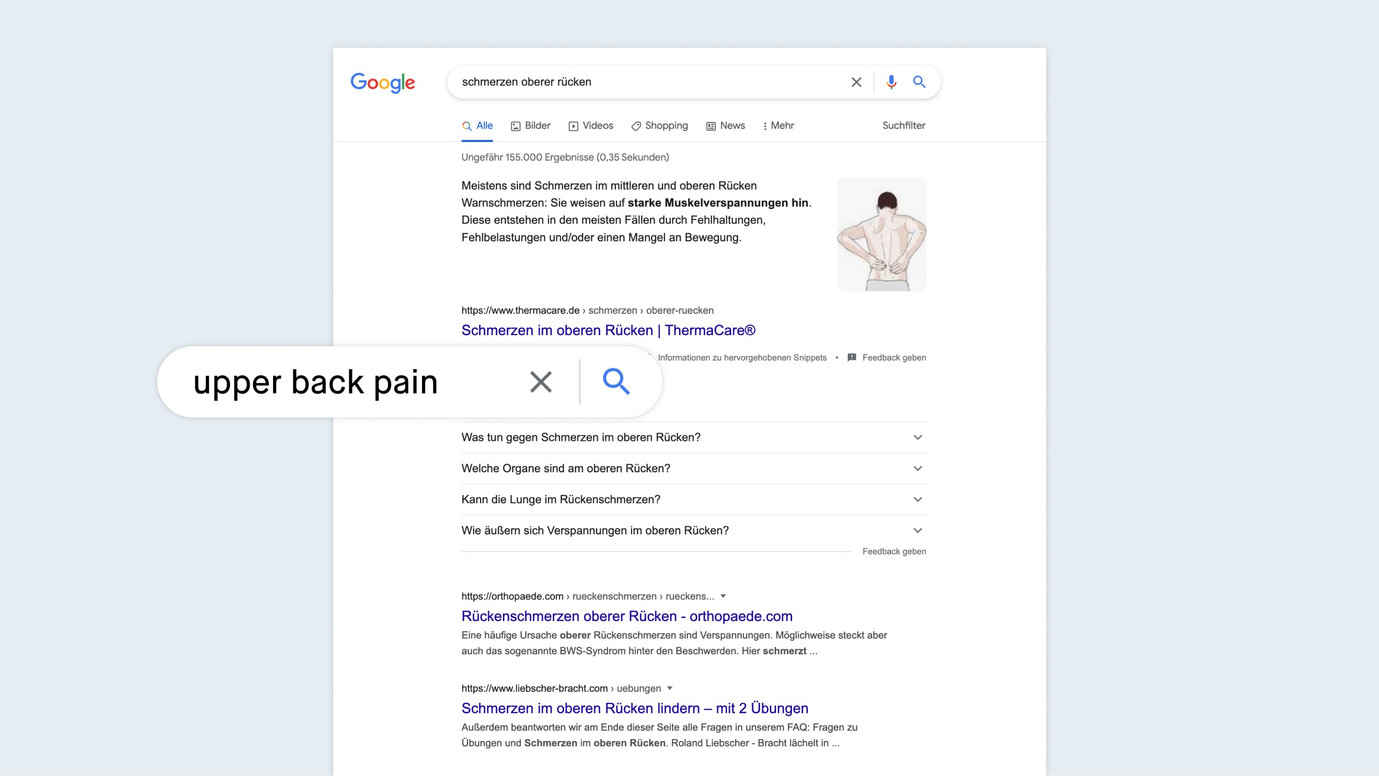
The search results are very similar across providers and indicate that users expect a detailed guide covering possible causes, typical symptoms, and treatment options.
All of this should be considered from the very beginning of content creation. And while professionals working in SEO tend to rely on tools for almost everything, the simplest and still most effective way to identify the search intent behind a keyword remains the manual approach:
Just google it.
The first step is therefore always to enter keywords into Google and analyze the search results. Based on what we see, we can quickly determine whether the planned content can realistically compete, whether a different keyword is required, or whether the content needs to be approached in an entirely different way. If we are planning an informational article and some of the keywords identified during research turn out to be transactional, they will not be included in the SEO content briefing.
As always, exceptions apply. In certain cases, it can make sense to include both transactional and informational keywords – for example, when SERPs (Search Engine Result Pages, i.e. the search results) are very mixed and cannot be clearly categorized. This can also apply to so-called hybrid pages, which provide comprehensive advisory content while still having a promotional character and primarily serving purchase intent. Even in these cases, however, careful consideration of the search intent behind each keyword is essential.
Manually analyzing search intent has another positive side effect: you almost inevitably examine competitors for the keyword. At school, copying from the person sitting next to you was punished. This may be one reason why some professionals working in SEO are still reluctant to admit that they draw inspiration from other websites.
In reality, this approach is not only acceptable, it is desirable and often necessary. In most cases, there is a good reason why the top three or top five results rank where they do. It is often noticeable that the highest-ranking pages for a keyword are very similar in structure and content. If Google attributes particularly high relevance to these pages and 'rewards' them with strong rankings, they are clearly doing something right.
If we want to compete at the top with planned content, it is essential to analyze what competitors are doing and let that inform our own approach. This does not mean copying a page one-to-one. However, certain subtopics covered by competitors should also be addressed. If all top-ranking pages include a step-by-step guide for a keyword, failing to do the same would significantly reduce the chances of achieving strong rankings.
But that’s not all. We also analyze our competitors to identify opportunities for improvement and deliver an even better user experience. Imitation can be an effective initial strategy for achieving strong rankings. However, the next step should always be to examine in detail what can be optimized. At this stage, our SEO specialists once again work closely with UX and UI designers.
Once keywords have been researched, search intent identified, and competitors analyzed, the next step is to structure the findings and prepare them for content writers in a text briefing.
All input related to structure and content is summarized in the Content Summary section of the SEO content briefing. This includes:

Additional fields specify the target audience, whether images, videos, or tables are required, and which internal links should be included. Product fit is also considered: during the first feedback round, clients can indicate which products should be referenced in the content.
Of course, the keywords that content writers need to use when writing copy should not be missing. Within the keyword list, we differentiate between focus keywords, synonyms, and secondary keywords.

The focus keyword, also known as the main keyword, is the central term of the planned content. It is the keyword that best reflects the topic of the article. As a rule, it is the keyword with the highest search volume for the planned topic. Whenever possible, it should appear unchanged, that is, not conjugated or declined, throughout the text and must be included in the meta title and the URL.
In addition, we provide a maximum of three to four synonyms, which are distributed throughout the text. These should have the same, or at least a very similar, search intent. This gives content writers greater flexibility, prevents the text from becoming unreadable due to repetitive use of the focus keyword, and allows additional search-relevant terms to be incorporated naturally.
Secondary keywords should be treated as subtopics within the content. In the keyword list included in the SEO content briefing, they are assigned from the outset to the corresponding subtopics defined earlier in the content summary under Structure. With these keywords, it is acceptable if they can only be integrated meaningfully in conjugated or declined forms – as always, readability takes priority over SEO.
They should, however, be used in a way that allows users to quickly identify them when scanning the text. Relevant keywords should therefore have their own H2 or H3 headings and, if supported by the page design, be included in the table of contents, ideally as anchor links.
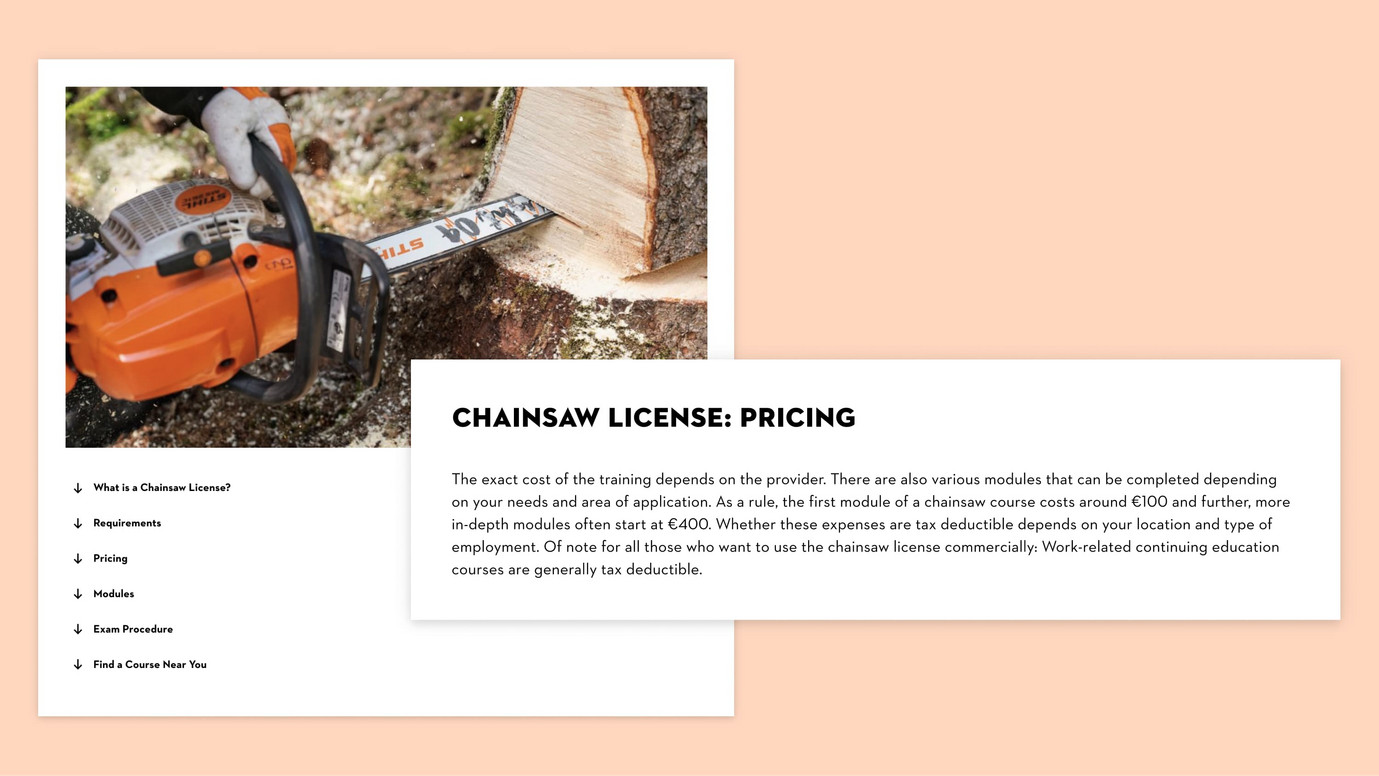
As a general rule, we aim to limit the number of secondary keywords to a maximum of 10–15, even though this best practice cannot always be followed in every case. We do not believe in including every keyword, no matter how marginal, that might be loosely related to the topic. An overly extensive keyword list not only makes the work more difficult for content writers, who feel compelled to include everything, but often results in text that appears artificial and inauthentic. Readers then get the impression that they are reading content written purely for SEO purposes, which should never be the goal.
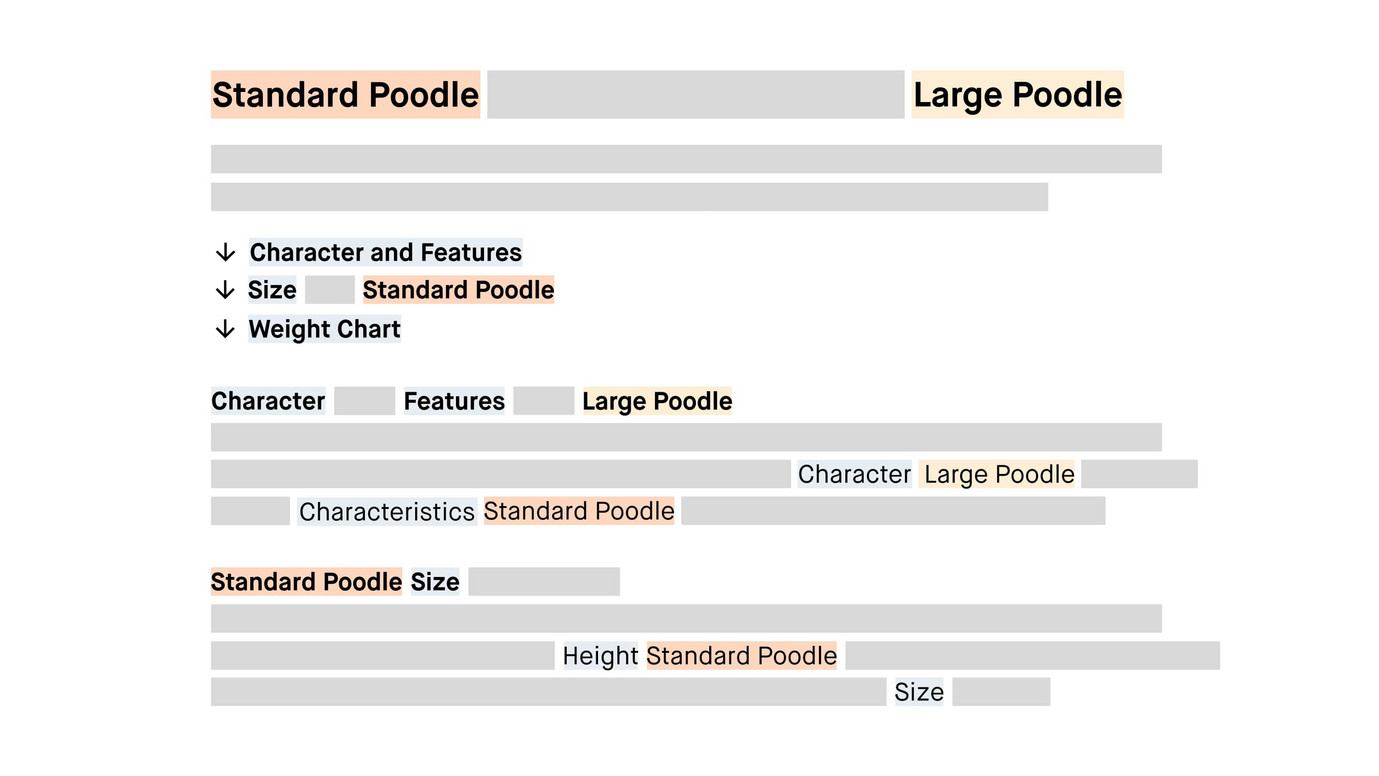
For this reason, the WDF*IDF tool is used only in exceptional cases. It compares the occurrence of keywords and related terms on a page with those on other pages ranking for the same topic. While this can help identify commonly used terms, it often leads to tool-driven thinking and the unnecessary inflation of keyword lists. This is especially problematic given that Google increasingly places less emphasis on individual words and instead evaluates content quality and relevance holistically, with a strong focus on user experience.
Keyword lists are also maintained after content has been finalized. During the SEO review of a completed text, all keywords and synonyms used are categorized – for example, as branded or non-branded, by topic cluster, or by URL relevance – and transferred to the Wincher tracking tool. This step is critical and should not be underestimated, as content creation is only half the process. Measuring performance through comprehensive tracking and deriving appropriate optimization measures is just as important.
We therefore approach content not only from an SEO perspective, but always from the perspective of the user, their needs and their behavior. Relevant subtopics also emerge from thorough competitor analysis, which should always be an integral part of the process. Some professionals working in SEO may be skeptical when they hear that we do not rely on countless tools and instead place strong emphasis on manual research. However, our results speak for themselves. Tools can certainly be helpful, and SEO work is not possible without them – but relying on them too heavily, or becoming dependent on them, often does more harm than good. As the saying goes: A fool with a tool is still a fool.
For this approach to succeed, close collaboration between SEO, UX, and UI is essential. Everyone involved, from SEO specialists to UX and UI designers to content writers, must have strong D2C (= Direct To Consumer) expertise. Our copywriters therefore also have an in-depth understanding of SEO and UX, enabling them to implement the specifications defined in SEO content briefings effectively and consistently.

We’ll get back to you as soon as possible.