In conversation with Stefan Ramershoven: "Manufacturers are missing out on opportunities in D2C"
5 questions for Stefan Ramershoven from Kjero on the potential of D2C


Björn Zaske, Managing Director of Moccu, in conversation with Stefan Ramershoven from Kjero on the topic of Direct to Consumer (D2C).
D2C has gained significant momentum in recent years, and some European companies have also jumped on the bandwagon. Stefan, like us at Moccu, you work with D2C for your clients. Please briefly introduce yourself and your company.
I'm Stefan Ramershoven, entrepreneur and founder of Kjero. That’s right. At Kjero, we specialize in direct-to-consumer marketing. I’m also the author of the book “D2C Growth Revolution – The No. 1 Growth Strategy for Consumer Brands.” Together with partners like you, we implement direct-to-consumer strategies for clients such as ThermaCare, Nivea, Manner, Nestlé, and Bosch.

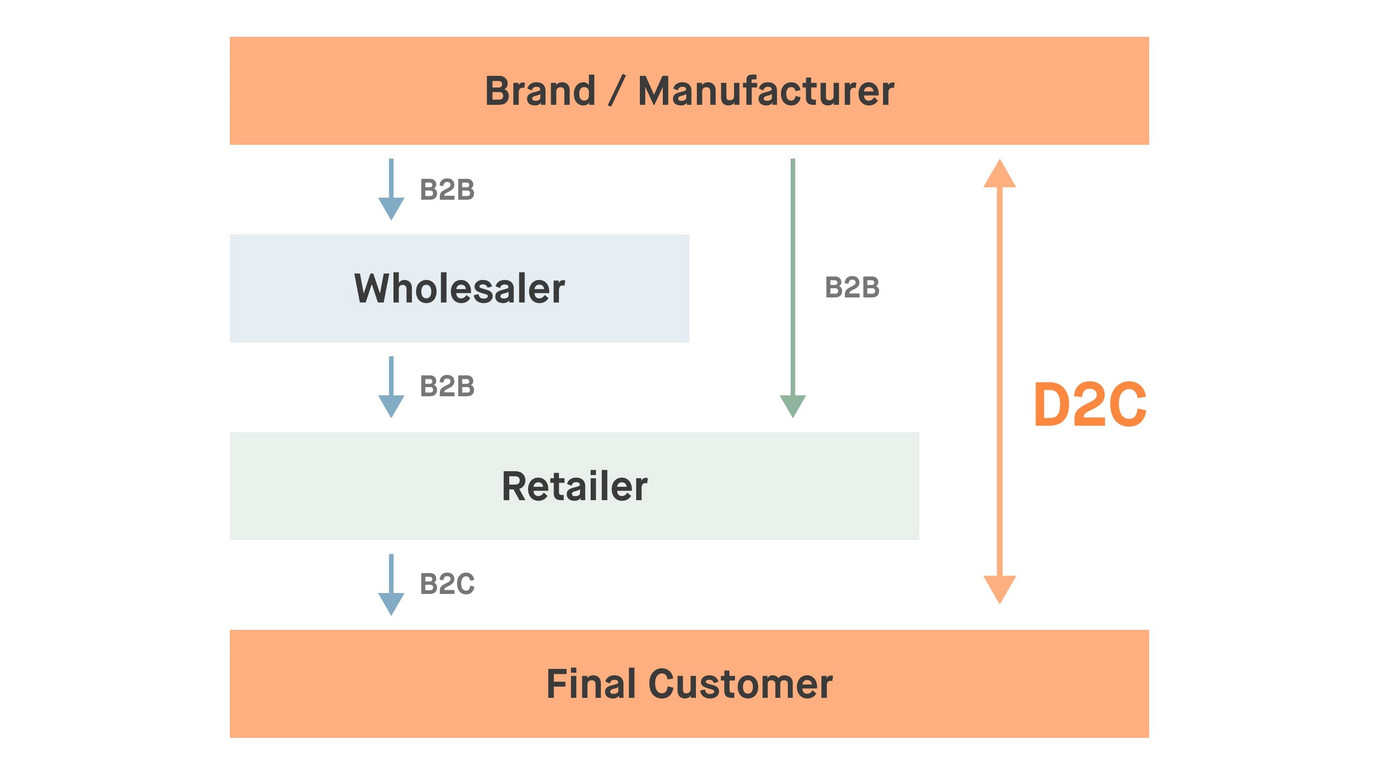
Thank you. We’re talking about “D2C.” How do you define it?
Traditionally, the term "direct-to-consumer" refers to manufacturers selling products and services directly to end customers. Following the motto “kill the middleman,” intermediaries are removed and manufacturers establish direct contact with consumers. However, it would be far too short-sighted to reduce D2C to merely a sales channel.
Direct to consumer is about building relationships with end customers and leveraging first-party data to create unique, profitable customer experiences. It gives brands the opportunity to truly put the end consumer at the center of their business activities. For anyone interested in exploring this further, we have prepared a free white paper titled "Direct-to-Consumer Transformation of Consumer Brands.".
For whom is D2C an opportunity?
Essentially, it is an opportunity for all brands and products aimed at consumers that are traditionally sold through retail, for example. It is also highly relevant for brands that have previously operated exclusively in wholesale and now want to open up a new sales channel through direct to consumer.
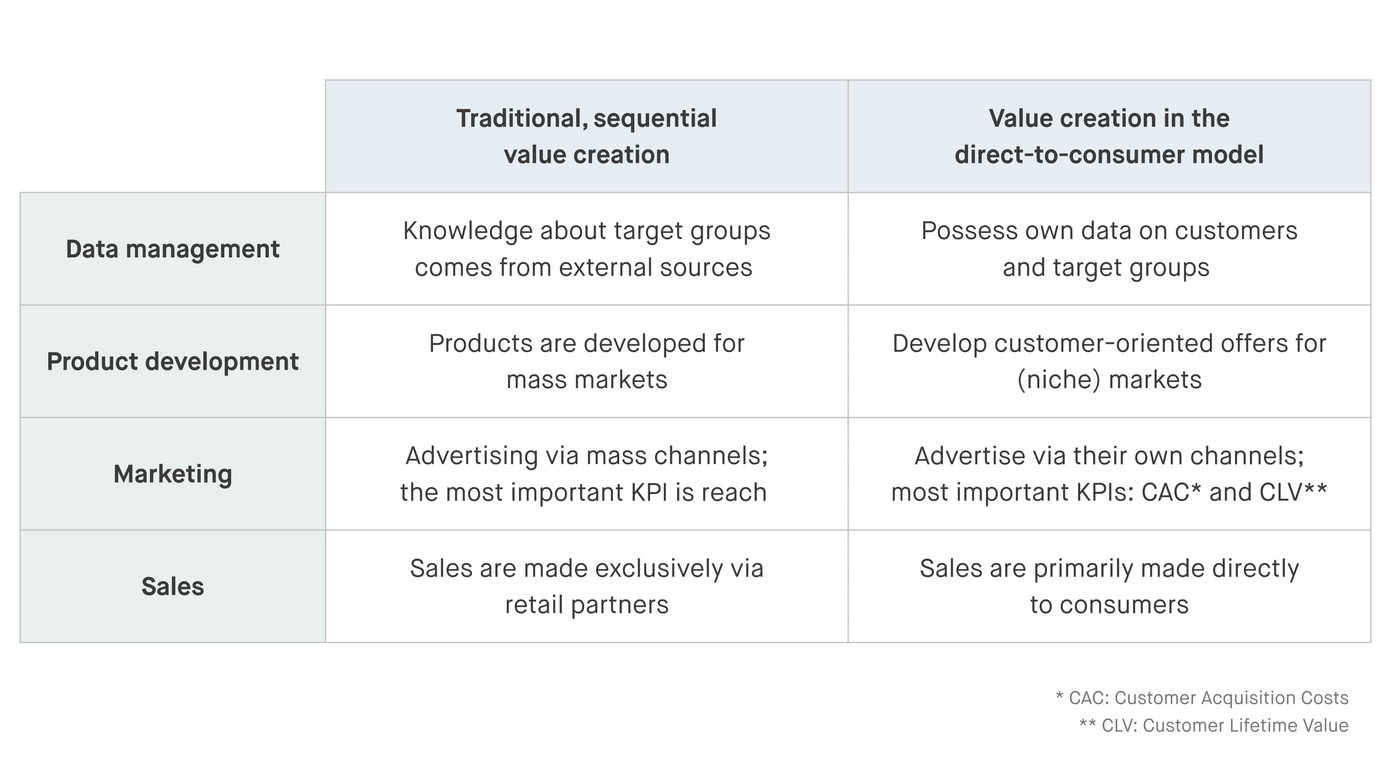
The classic marketing model of using mass channels to promote mass products at scale, as we know it from companies like Procter & Gamble, Mars, and Nestlé in previous decades, no longer works today. Brands struggle to reach consumers through these channels. At the same time, the traditional distribution model of selling exclusively through retail partners makes brands very dependent. This dependency can go so far that branded manufacturers can be easily delisted by retailers. A prominent example is the conflict between Kraft Heinz and Edeka a few years ago.
D2C, on the other hand, offers the opportunity to transform outdated business models, collect first-party data directly from customers, and engage in meaningful exchanges with target audiences. Ultimately, this strengthens customer loyalty and enables brands to build strong communities that remain loyal over the long term.

I hope that many of the brands we grew up with seize this opportunity. Otherwise, one or two traditional brands may soon disappear from store shelves, and hardly anyone will even notice.
Are there any positive examples of D2C in Europe or even Germany?
For me, Nike is definitely a standout example. Nike was one of the pioneers and now generates around 30 percent of its revenue through D2C. Caspar, Warby Parker and Ace & Tate are also strong examples, as are German brands like Snocks and Kapten & Son.
I would also like to highlight the dog food brand tails.com. It implements the principle of customer-centricity very well by removing complexity from the purchasing decision. Typically, consumers are confronted with an overwhelming number of dog food options. Anyone who has ever walked into a Fressnapf store as a dog or cat owner will understand this immediately.
Choosing the right food for your dog from this vast assortment is incredibly challenging. At tails.com, by contrast, there is no traditional choice at all. There is simply a website with a button leading to a questionnaire. Once users complete it, they receive a food mix that is customized specifically for their dog and tailored to its individual needs. For me, this is a prime example of how brands can rethink the buying experience and optimally serve their target audience.
When a customer asks you how to approach D2C, what do you tell them?
The first step is to establish direct contact with your target audience and start building relationships. By that, I do not just mean using channels like Instagram or Facebook. I am talking about owning your data. Who are my customers? What are their names? What products do they buy? And what is the best way to reach them? The result is essentially a form of CRM, similar to what we have long been familiar with in the B2B world. The goal is to use this data as effectively as possible. For some brands, an online shop is the right solution. For others, it is a brand community, while others may opt for a loyalty program or points system.
Which D2C strategy makes the most sense depends entirely on the brand or product. How frequently is the product purchased? What is the customer lifetime value (CLV)? And how high can customer acquisition costs (CAC) realistically go?
These essential questions help to define a viable D2C business model.
There is, however, another key component that plays a role in every successful D2C approach. Social media is always central. The Süddeutsche Zeitung recently wrote about D2C and described Instagram as the “eternally open, global shop window.” That description is spot on. The only difference compared to offline retail is that online, you can actually shop at any time, not just stand in front of the window.
Do you have any additional tips, podcasts, books, or similar resources on the topic of D2C?
There is actually very little specialized literature on the topic, and even less available in German. I would advise companies that want to seriously pursue D2C to dive deeper into topics like growth hacking and funnel optimization, and to closely follow established D2C brands.
It can also be extremely valuable to become a customer of a D2C brand yourself and experience the entire journey from a consumer’s perspective. Experiencing true customer-centricity firsthand can teach you a great deal.
Sounds interesting? Arrange an initial consultation.

Thank you!
We’ll get back to you as soon as possible.
